The question people usually ask is "How many watts do I need?" It's the wrong place to start. Here's what decides whether a speaker works at your event.
Why watts mislead
Speaker boxes quote watts in different ways: peak, RMS, PMPO. One brand's "1000W" and another's "1000W" can mean very different things. Even honestly measured, perceived loudness doesn't scale simply with watts. Doubling power gives a modest increase in volume, not double. Use watts only to compare speakers from the same supplier, and size by guest count.
The four questions that matter
1. How many people, and where?
Size from the guest count:
- Up to ~30 indoors: a compact 10-inch speaker for background music.
- Up to ~50: a 100W speaker with a 10- or 12-inch woofer.
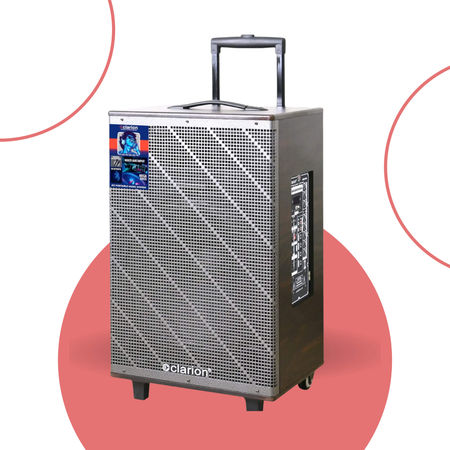
- 50–150: a 15-inch speaker in the 1000W class.
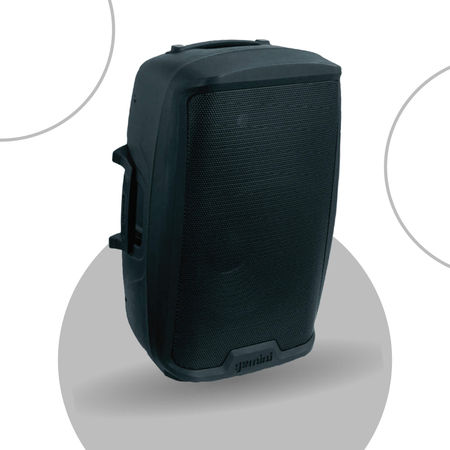
- 150–250 or large lawns: a 2000W-class PA speaker with a compression driver.
Outdoors, sound has no walls to reflect off, so it fades faster. Go one size up.
2. Is it for music, speech or both?
Music at a party is forgiving. Speech isn't. If guests must understand a welcome address at the back of a hall, you need a speaker with a dedicated high-frequency driver (a tweeter or compression horn) placed at about head height. Bigger woofers mostly add bass; clarity comes from the high-frequency driver and placement.
3. Who needs a mic?
- Wired mic: one person, one spot. Cheapest and reliable.
- Wireless handheld: hosts, anchors, duets, audience Q&A.
- Headset or collar mic: trainers, instructors and anyone who needs both hands.
Two people speaking at once needs two mics, so pick a speaker that supports two inputs.
4. Where's the power?
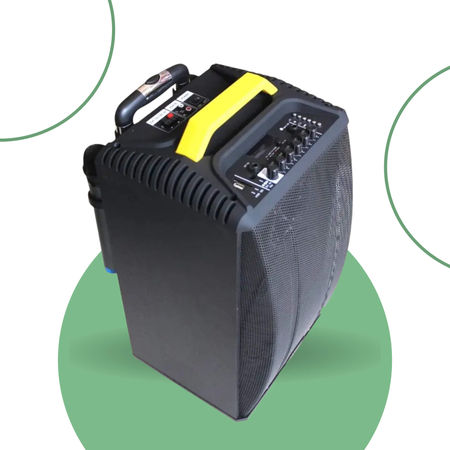
Battery speakers free you from sockets for a few hours, which is useful on terraces, lawns and in processions. For a long evening, plug in. Large PA speakers usually run on mains only, so confirm a working socket at the speaker position before you book.
Small features that matter at real events
- Mic echo and separate bass/treble: make karaoke sound better.
- Guitar input: lets a live performer use the same speaker.
- USB or SD playback: keeps music going without draining your phone or depending on mobile data.
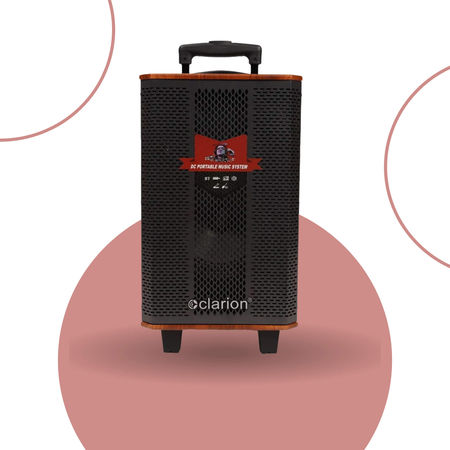
- Trolley wheels: matter more than you'd think when the lift is small.
One speaker or two?
For music in a long or L-shaped room, two speakers placed apart cover the space more evenly. For speeches to a seated audience, one well-placed speaker at the front is simpler and less prone to feedback.
Quick picks from our range
- 80W Saga: dinners and poojas, up to ~30, no mic
- 100W 10-inch: house parties with a mic, plugged in
- 100W 12-inch party speaker: karaoke, terraces, 3–4 hr battery
- 1000W with 2 wireless mics: functions up to ~150
- 2000W PA: weddings and large events up to ~250